Car shopping doesn’t start on the lot anymore. It starts with a search. Today’s buyers research vehicles, compare prices, and read reviews long before they ever walk through a dealership’s doors. For local auto dealers, this shift means one thing: your website has to work as hard as your best salesperson.
Here’s why attracting local car buyers, capturing them into your sales pipeline, and identifying your website visitors are three of the most important pieces of a modern dealership marketing strategy.
Why Attracting Local Car Buyers to Your Website Matters?
Most car buyers don’t want to drive across the state for a new vehicle. They want a trustworthy dealer close to home. That’s why local visibility, through local SEO, Google Business Profile optimization, and location-targeted content, is one of the highest-value investments a dealership can make.
When your website ranks for searches like “car dealerships near me” or “[vehicle type] for sale in [city],” you’re putting your inventory in front of buyers who are actively ready to purchase, not just browsing. A strong local presence also builds trust before the first interaction even happens.
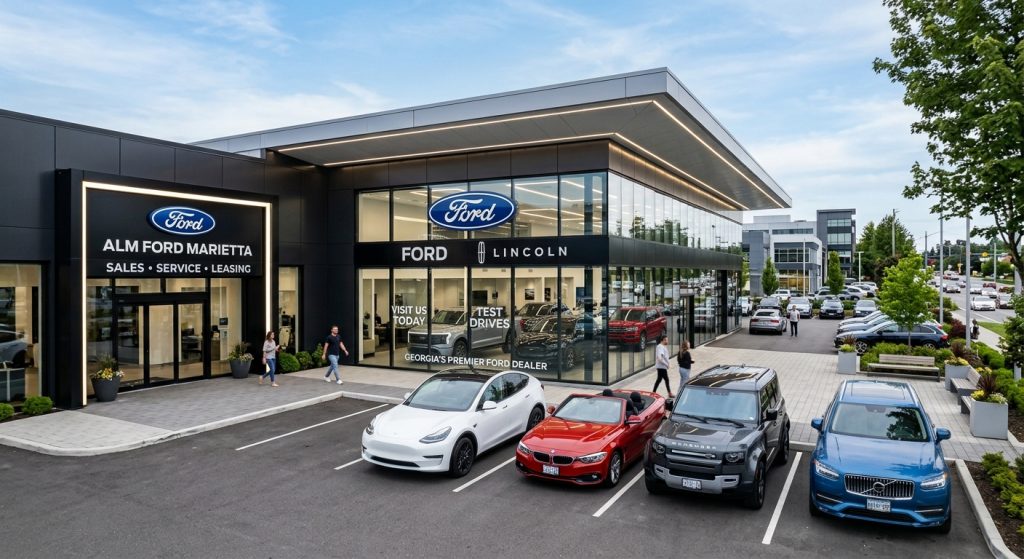
This is exactly the kind of visibility our featured dealer partners are building on. Buyers across the country are already connecting with trusted local dealerships such as ALM Ford Marietta, Jim Ellis Toyota, Maher Chevrolet, Maus Nissan, Nissan of Rivergate, Volkswagen of Orchard Park, Spring Street Motors, Classic Chevy Sugarland, Audi Stuart, and Keystone Ford— all listed in our Auto Dealers Directory. Each of these dealerships shows how a strong local digital presence turns nearby searchers into showroom visitors.
Why Getting Buyers Into Your Sales and Marketing Pipeline Is Critical?
Attracting traffic is only step one. The dealerships that win are the ones that convert that traffic into leads, and leads into pipeline.
A car purchase is rarely an impulse decision. Buyers often research for weeks, comparing models, financing options, and trade-in values before they’re ready to commit. If your website doesn’t capture their information early, whether through a trade-in value tool, a financing pre-qualification form, or a “schedule a test drive” request, you lose the opportunity to stay in front of them during that decision window.
A well-structured pipeline means every lead, whether they’re ready to buy today or three months from now, gets nurtured with the right follow-up: email offers, inventory alerts, and personalized outreach from your sales team. Dealerships that treat their website as a lead-generation engine, not just a digital brochure, consistently outperform those that don’t.
Why Identifying Website Visitors Matters for Remarketing?
Here’s a hard truth: the vast majority of website visitors leave without filling out a form. That doesn’t mean they’re not interested, it often just means they’re not ready yet.
Visitor identification tools help dealerships de-anonymize website traffic, giving your team the ability to see which visitors browsed specific inventory, how long they stayed, and what pages they viewed, even if they never submitted a form. This data is gold for remarketing. It allows your team to:
- Serve targeted ads showing the exact vehicles a visitor browsed
- Prioritize warm leads for your sales team to follow up on directly
- Build custom retargeting audiences based on real browsing behavior, not guesswork
Without visitor identification, most of your website traffic simply disappears into thin air. With it, that traffic becomes a remarketing asset that keeps your dealership top of mind until the buyer is ready to purchase.
What Vehicles Are U.S. Buyers Actually Choosing Right Now?
Understanding what’s trending helps dealerships align inventory, content, and ad spend with real demand. According to recent 2026 sales data, pickup trucks continue to dominate the U.S. market, with the Ford F-Series holding its long-standing position as the country’s best-selling vehicle, even as the Honda CR-V strengthened its position as America’s best-selling SUV and top non-truck model.
A few other notable trends so far in 2026:
- The Chevrolet Silverado and Ram Pickup remain strong competitors in the full-size truck segment, with the Ram posting standout growth this year.
- Passenger cars are seeing a modest comeback, with the Toyota Camry, Toyota Corolla, and Honda Civic all posting year-over-year gains, suggesting renewed buyer interest in traditional sedans after years of SUV dominance.
- Crossover SUVs remain a favorite for buyers who want the fuel efficiency of a sedan combined with the higher seating position of a light truck, with models like the Honda CR-V, Nissan Rogue, and Toyota RAV4 leading the category.
For local dealerships like Maus Acura, ALM GMC South, ALM Kia Perry, and Firkins CJ, this data is a useful cue: trucks and crossover SUVs remain the vehicles buyers are actively searching for, making them strong candidates for featured inventory, blog content, and paid ad targeting.
Turn Your Website Into a Lead-Generating Tool
A dealership website that only displays inventory is leaving business on the table. The dealers seeing the strongest results are combining local visibility, structured lead capture, and visitor identification into one connected strategy, so no interested buyer slips through the cracks.
Ready to see how your dealership stacks up locally? Browse the Auto Dealers Directory to see how local dealers like these are positioning themselves online, or reach out today to get a free review of your website’s lead capture and remarketing setup.